Advanced injection therapy for lasting knee pain relief
and better mobility.
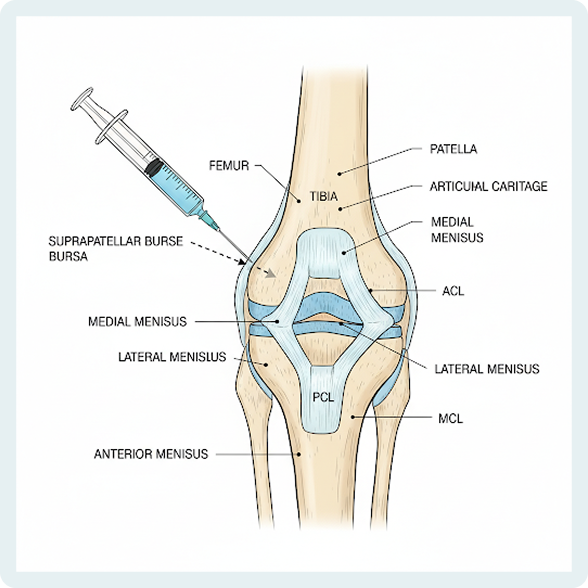
Knee injections deliver medication directly into the joint to reduce inflammation, ease pain and improve joint function without surgery.
What it is
Injection of medicine or therapeutic substances into the knee joint.
How it works
Reduces inflammation, lubricates the joint and promotes healing.
Who it is for
People with knee pain due to arthritis, injury or wear and tear.
Key benefits
Key Benefits
Reduces Pain
Medicine placed in the joint can settle a painful flare.
Improves Mobility
Less pain can make walking and physiotherapy easier.
Minimally Invasive
The injection is given in the clinic. It is not an operation.
Quick Procedure
Most patients walk afterwards and rest the knee that day.
Faster Recovery
Relief may last weeks or months. It varies from person to person.
Delays Surgery
An injection can postpone surgery. It does not replace it when the knee is severely worn.
Treatment Process
Treatment Process
1
Consultation
Detailed evaluation of your knee condition and medical history.
2
Examination
Clinical examination and imaging (if needed) to confirm diagnosis.
3
Injection
Injection is given into the knee joint under sterile conditions with precision.
4
Follow-up
Guidance on activities, medications and follow-up for best results.
Common questions
Frequently Asked Questions
What is a knee injection?
Medicine is placed into the knee joint to reduce inflammation and pain. It is considered when tablets, exercise, and bracing have not given enough relief.
Which injections are used?
A steroid injection can settle a flare. Hyaluronic acid and platelet-rich plasma are sometimes used for longer symptom relief. The choice depends on your knee and your medical history.
How long does relief last?
Steroid relief may last from a few weeks to a few months. Other injections vary from person to person. An injection does not regrow lost cartilage, and it is repeated only when that is appropriate.
What should I expect on the day?
The knee is examined, the skin is cleaned, and the injection is given in the clinic. Most patients walk afterwards. Rest the knee that day and follow the activity advice you are given.
Book Your Appointment
Book a consultation — Dr. Patel will assess your X-rays and symptoms and create a personalised treatment plan.