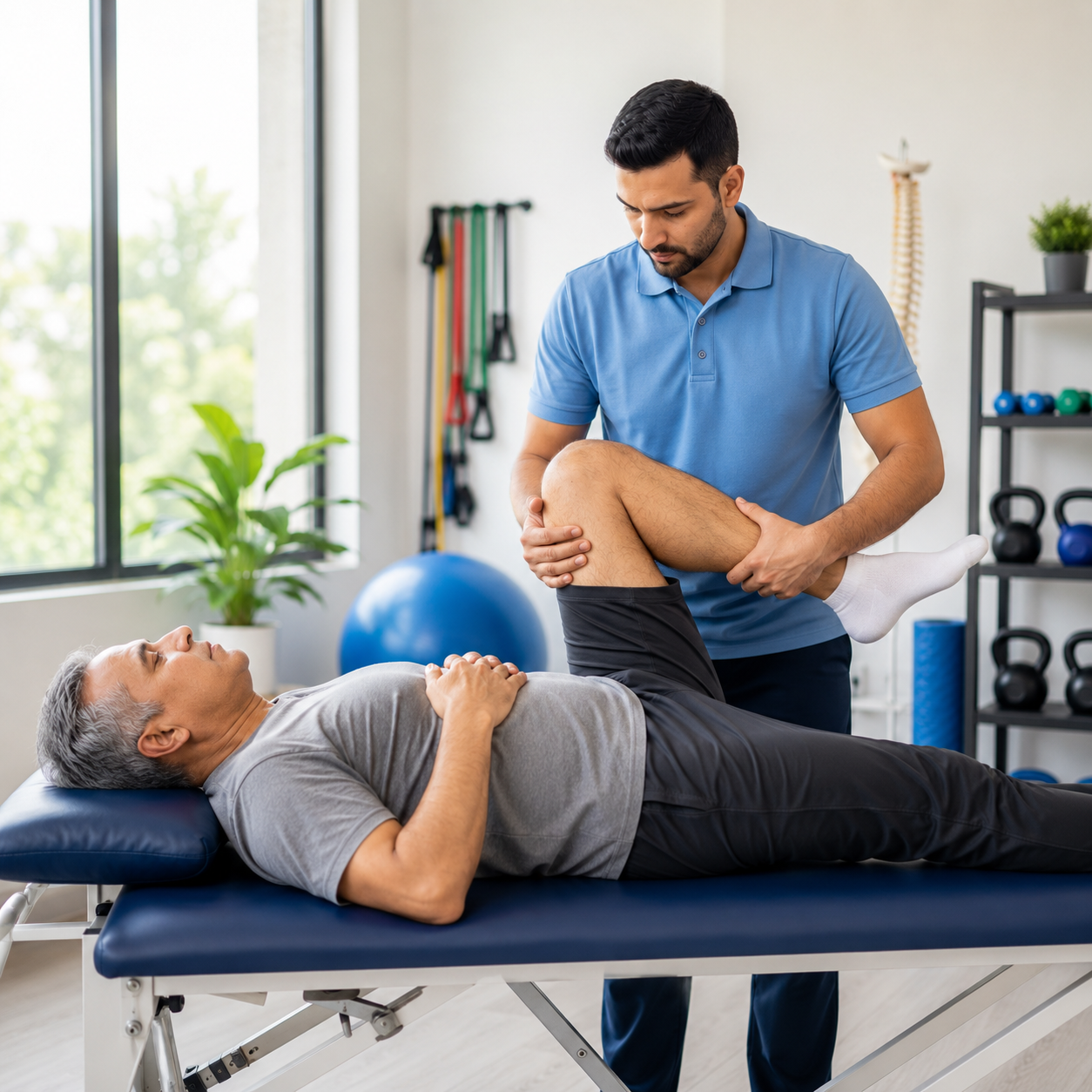
Personalized rehabilitation to reduce pain, restore movement and improve everyday function.
Physiotherapy uses targeted exercises, hands-on techniques and rehabilitation strategies to help reduce pain, improve strength, flexibility and mobility—supporting recovery without unnecessary intervention.
What it is
A personalized treatment program using exercises, manual therapy and rehabilitation techniques to improve movement and function.
How it works
Strengthens muscles, improves joint mobility, reduces stiffness and helps restore normal movement and function.
Who it is for
People with joint pain, arthritis, stiffness, muscle weakness, sports injuries or those recovering after surgery.
Key benefits
Key Benefits
Reduces Pain
Exercise and hands-on treatment can ease knee pain.
Improves Mobility
Bending and walking are practised in the clinic and at home.
Builds strength
Thigh and hip muscles are strengthened so the knee is better supported.
Home exercises
You leave with a short programme to continue between visits.
Steadier walking
The aim is a safer, more comfortable walk.
May delay surgery
For many patients this is enough. For others it prepares them for surgery.
Treatment Process
Treatment Process
1
Consultation
Detailed evaluation of your knee condition and medical history.
2
Assessment
Clinical examination and imaging (if needed) to confirm diagnosis.
3
Therapy
Exercises and hands-on treatment are used to improve strength, bending, and walking.
4
Follow-up
Guidance on activities, medications and follow-up for best results.
Common questions
Frequently Asked Questions
How is physiotherapy different from home exercise?
A physiotherapist assesses how you walk, bend, and use your muscles, then teaches exercises and hands-on treatment suited to your knee. The home programme continues that plan between visits.
What happens in a session?
You are assessed, then guided through strengthening, flexibility, and walking practice. Heat, ice, or manual treatment may be added. You leave with exercises to continue at home.
How many sessions will I need?
Many patients improve over a few weeks when they practise at home. The number of visits depends on pain, stiffness, and whether you are recovering from an injection or surgery.
Can physiotherapy avoid surgery?
For many patients, physiotherapy is enough to improve pain and walking. If the arthritis is already severe, it still helps you prepare for and recover from surgery, but it may not replace the operation.
Book Your Appointment
Book a consultation — Dr. Patel will assess your X-rays and symptoms and create a personalised treatment plan.